
Old Bridge City Directory Collections
No confirmed year runs of an Old Bridge or Madison Township city directory are established. That gap matters. Treat any regional book as a lead rather than a complete residents directory for this town. Ask the holding institution for the title, edition, format, and date range first. The strongest local starting points are the Old Bridge Public Library and the Thomas Warne Museum and Library. The Old Bridge digital archive and statewide directory inventories round out the list. Each opens a different kind of dated evidence. So a property roll at one may complement a parcel file at another.
| Collection path | Confirmed time scope | Where to check | Access route |
|---|---|---|---|
| Old Bridge digital archive newspapers and documents | Documents described as dating to the early 1900s; title runs require verification | Digifind-It Old Bridge collection | Keyword and date research online |
| Madison, Old Bridge, and neighboring directories | Exact local run unconfirmed | Old Bridge Public Library and NJ State Library inventory | Ask staff for book, reel, microfiche, or database availability |
| Criss-cross and address directories | Especially common from the 1960s onward, with local holdings unconfirmed | Library, historical society, and Library of Congress guidance | Request by place, directory type, and year |
| Family files, photographs, cemetery, and church leads | Collection-specific dates must be confirmed | Thomas Warne Museum and Library | Research support and appointment-based visit |
A city directory is one shelf in the trail, not the whole trail. Compare an address listing against a newspaper item. Try a deed reference, a census record, or a local-history file too. The comparison pays off. It catches the years a person moved, used a middle initial, or appeared under an older township name in the street directory.
Note: Record the holding institution and the exact edition before citing any local directory result.
Search Old Bridge Madison Directories
Old Bridge research needs more than one place name. The present township separated from South Amboy in 1869. It kept the Madison Township name through the long transition to Old Bridge. Township history points to a 1975 referendum; the Thomas Warne Society gives 1976. The sources disagree by a year, so record both rather than smoothing the date over. Search South Amboy Township, Madison Township, Madison, and Old Bridge in catalogues, newspapers, deeds, and every directory index.
Alias searching also avoids a common false negative. A family may sit in a Madison-era volume yet vanish from a search limited to modern Old Bridge. The same caution covers nearby postal names. Postal labels and municipal jurisdiction are separate facts. Preserve the place exactly as printed, and add the modern township only as a research note.
Old Bridge Newspaper Directory Trails
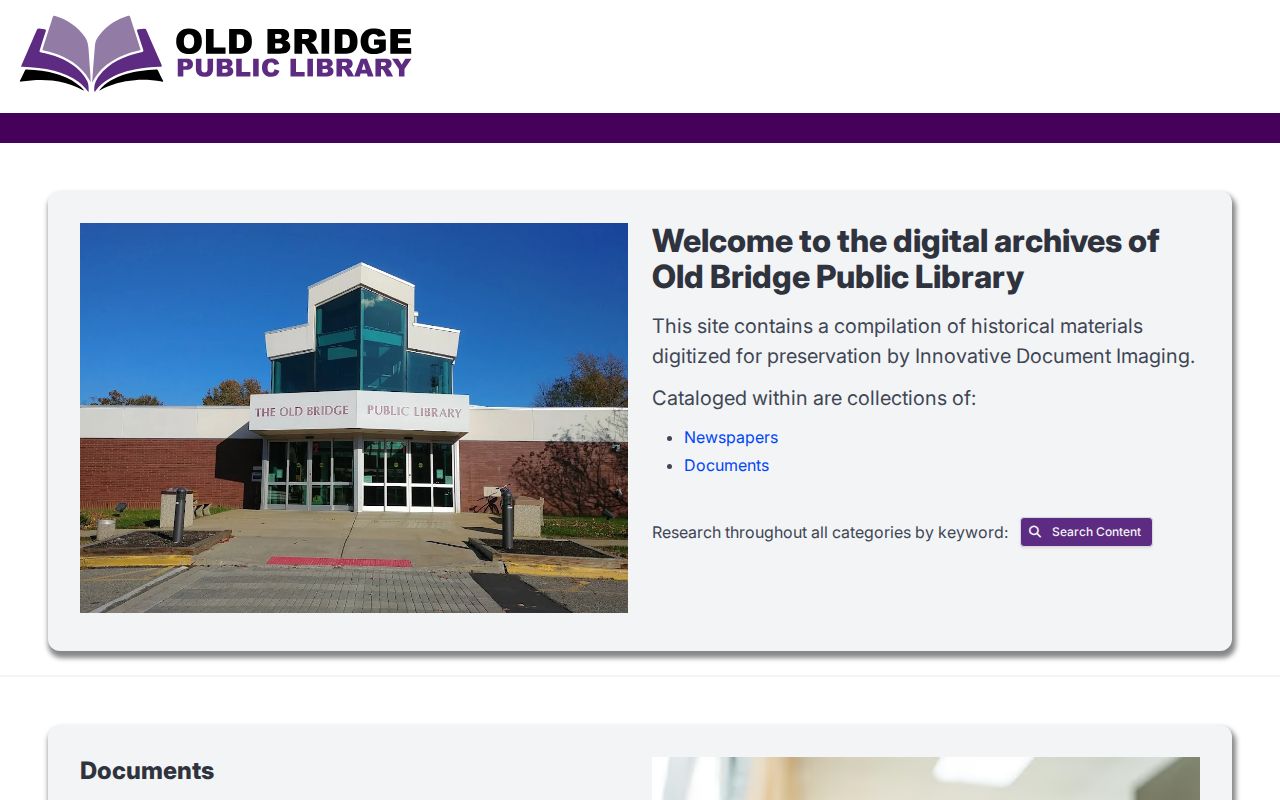
The Old Bridge digital archive is a practical companion. It helps when no confirmed directory volume covers the year you need. Its Newspaper and Documents categories hold clippings and special editions. These reach back to the early 1900s. The title list runs from the Madison American and Madison Record to the Madisonian, The Truth, South County Spokesman, and the Perth Amboy Evening News. Search a surname fragment or a street number. Try an institution, a business, and each historical alias in turn.
The archive search and title-list view lays out the digitized newspaper and document paths.
OCR can miss a name or garble an old typeface. Open the scan itself. Log the title, issue date, page or clip identifier, and the URL. Also note the kind of mention found. A notice or obituary establishes a dated historical mention. It is not a present address or a resident lookup result.
Newspaper work shines between sparse directory years. A meeting notice, legal notice, school story, advertisement, or obituary can supply the date. That date points you to the next directory, census, deed, or museum query.
Old Bridge Directory Research at Warne
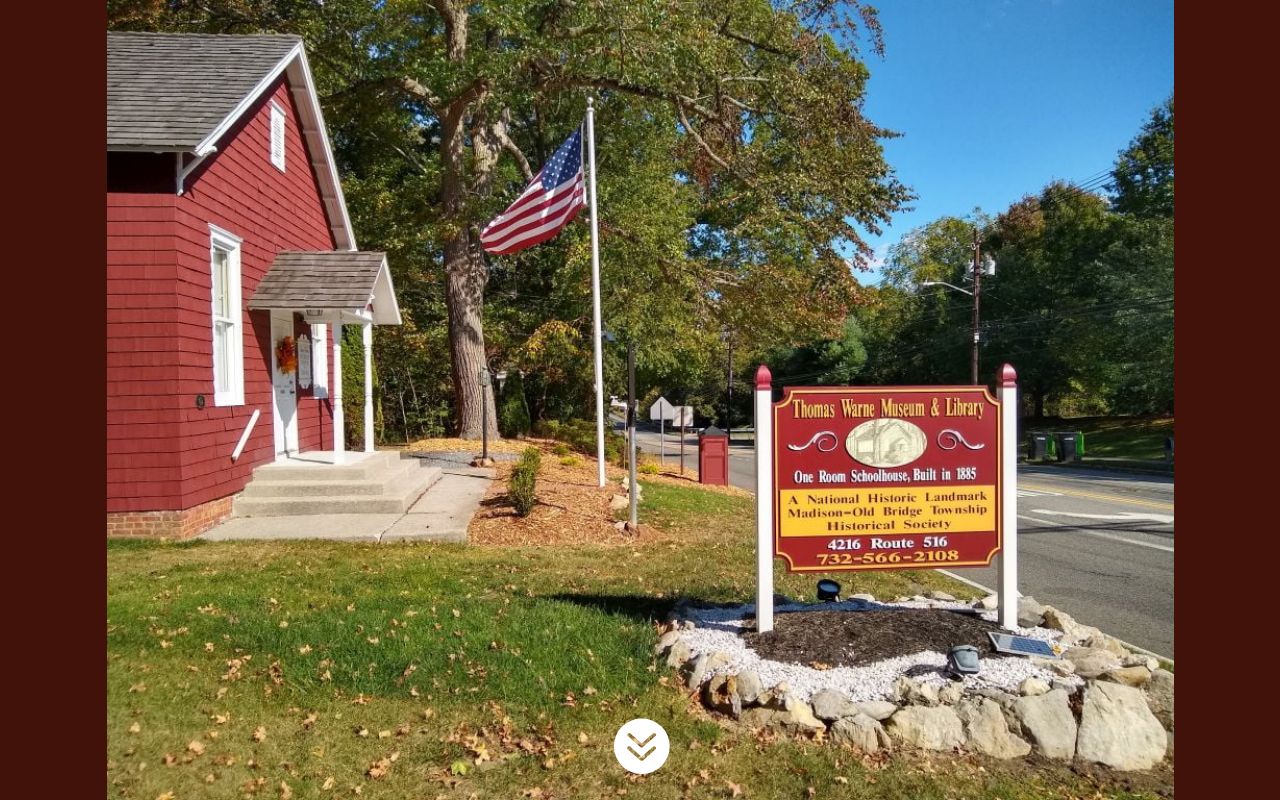
The Thomas Warne Museum and Library anchors local history for the former Madison Township. Its collections also reach across the wider Old Bridge area. The Madison-Old Bridge Historical Society formed in 1964. It works from the Cedar Grove schoolhouse. The building was built in 1820 and updated in 1885. It closed as a school in 1947 and has served as a museum since 1964. Research computers and genealogical and historical support are advertised on site. Ask about family files, photographs, and building histories. Ask too about cemetery or church leads. Staff may also point you to any Madison or Old Bridge directory material in the collection.
The museum's public history and contact page describes the collection's local research setting.
Visits run by appointment Monday through Friday and Saturday from noon to 4 p.m. Admission is free, and donations are welcomed. Confirm arrangements before traveling. Museum staff can narrow a family or property question, but any lead still needs a dated source citation to stand.
Read an Old Bridge Directory Entry
Transcribe a directory entry before interpreting it. The Library of Congress notes that city directories may be arranged alphabetically by name. Others are organized by street, or by telephone. Entries can carry an address, an occupation, and sometimes a spouse. Details vary by edition. Never assume a symbol means the same thing across publishers or years. Photograph or copy the abbreviation key and the title page along with the entry.
| Name as printed | Preserve initials, spelling, suffixes, and any partner or spouse reference. |
|---|---|
| Street and number | A dated address lead that should be checked against the volume’s street format. |
| Occupation or organization | A historical affiliation, not proof of a current home address. |
| Directory type | Identify whether the listing is alphabetical, telephone, or arranged by street and house number. |
| Edition citation | Keep title, edition year, page, holding institution, and image or reel reference. |
- Criss-cross directory
- An address-first directory arranged by street and house number, useful for finding the listing printed for one location.
- Householder index
- An index that identifies the household name connected to a listed address in that edition.
- Abbreviation key
- The publisher’s legend for shortened words and marks. Its meaning belongs to that volume, so save it with the entry.
Finding Old Bridge Directory Holdings
The Old Bridge Public Library, at One Old Bridge Plaza, is the natural first stop. Ask at the reference desk about local-history holdings. Newspapers, public computers, genealogy tools, maps, and microfilm are also worth asking about. The library also maintains a connection to the digital archive. Ask staff for a catalogue check. Try Madison, South Amboy, Perth Amboy, Matawan, New Brunswick, and broader regional headings. A residents directory volume may sit on the shelf under a nearby community. It may not sit under the current township name.
The New Jersey State Library city-directory inventory, last updated October 19, 2018, lists holding formats. These include books, rare books, reels, and microfiche. It also names public-library and historical-society locations, plus Gale or HeritageQuest access. The inventory publishes no exact Old Bridge or Madison run. A direct staff request is therefore essential.
Give staff enough detail to check a shelf or a catalogue record. Name the historical place, the directory type, and the approximate year. Add a surname or street if you have one. Say whether an alphabetical or an address arrangement would serve you better. The Library of Congress describes its city-directory collection as running mainly from 1861 to 1960. It spans roughly 1,200 communities, with gaps. Its guidance asks requesters to state the location, state, type, and years. That format works well even when the local street directory holding sits elsewhere.
Old Bridge Directory Timeline and Name Changes
Anchor any timeline to municipal history, not to a guessed publication sequence. The municipal record tells a researcher which name belongs in a catalogue search. It also shows which record systems may exist for a given era.
- Before 1848: civil registration had not begun in New Jersey, so church, cemetery, probate, land, court, census, and newspaper sources carry much of the family trail.
- 1869: the present township separated from South Amboy, changing the municipal context for later directory and land research.
- 1869 to 1975 or 1976: search Madison Township and Madison, because the official township and historical society sources disagree by one year on the name transition.
- 1975 or 1976 onward: add Old Bridge Township, then compare newspapers, county records, and local institutions for continuity.
Caution pays off in family use. An entry under Madison may be the right household even when a modern map calls the area Old Bridge. Cite the historical label exactly. Then document the modern geographic connection separately.
Note: A change in township name does not prove a street name or house number stayed the same.
Trace an Old Bridge Directory Household
Treat a city directory entry as a dated checkpoint. Test it against independent records. Start with the earliest confirmed printed spelling of the name. Follow it through later editions when holdings permit. Note every address, initial, spouse reference, occupation, and source page. Pair each directory date with the closest available census. Then check the Old Bridge archive for an obituary, announcement, meeting notice, or business item. Keep the result a sequence of source-labeled facts rather than a claim that everyone at an address was related or present on every date.
- Request the exact directory title and year from the library, historical society, or statewide holding inventory.
- Copy the complete entry and its abbreviation key, with the page and the historical township name.
- Search the same name, address, and historical alias in the digital archive and census resources.
- Use the Old Bridge resident lookup path only when a modern record needs separate verification.
- For a property question, compare a dated deed reference or county parcel pointer without treating ownership as occupancy.
A disappearance can mean many things. It may signal a move, a death, a changed spelling, a new household arrangement, or a gap in the editions on the shelf. Treat it as a question to test. When the city directory shelf is incomplete, the State Archives, State Library, public library, and Thomas Warne Museum each offer a different fallback route for the resident lookup.